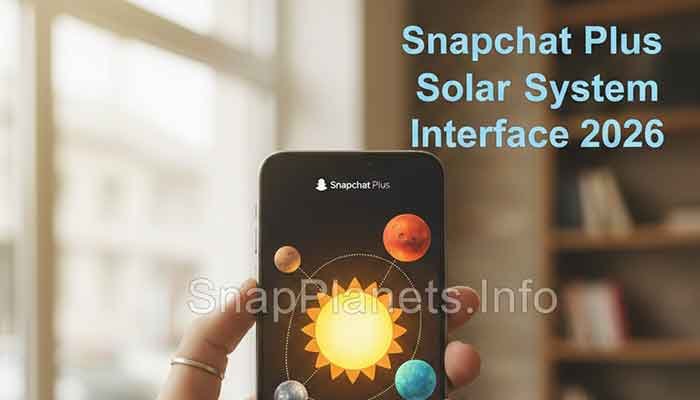
Hey there! I’m Martin. If you’re anything like me, your phone is basically an extension of your arm, and Snapchat is the heartbeat of your social life. But let’s be real—nothing stirs up more “wait, what does that mean?” energy than seeing a tiny planet next to your bestie’s name.
I remember back in 2022 when I first noticed the history of Snapchat Planets beginning to unfold. I was sitting in a coffee shop, and my buddy Dave showed me his screen. He was stoked because he was “Mercury” in his crush’s solar system. I, on the other hand, was “Neptune.” Ouch. That was the moment I realized this wasn’t just a cute space theme; it was a full-blown digital hierarchy.
Since then, the feature has gone through a wild ride of updates, controversies, and shifts in how we use it. Let’s dive into the cosmic mess that is the Snapchat Friend Solar System.
My Personal Experience with Snapchat Planets
I’ve been a Snapchat+ subscriber since day one (yeah, I’m that guy). When the evolution of solar system rankings first hit the app, I spent way too much time obsessing over them.
One weekend last year, I noticed my best friend of ten years had moved from Mercury down to Earth. I actually found myself wondering, “Wait, is she mad at me? Are we not talking enough?” It turned out she just started a new job and was snapping her coworkers more to coordinate shifts.
That was my “aha!” moment. I realized that while the history of Snapchat Planets is fascinating from a tech perspective, these rankings are just algorithms—they don’t actually define the soul of a friendship. It’s a tool for fun, but man, it can definitely get in your head if you let it! Have you ever felt that pang of “ranking anxiety”? It’s totally normal, but trust me, it’s rarely as deep as the app makes it feel.
Read More: Snapchat Planets Mental Health: A User Review by Martin
The Birth of the Cosmic Ranking (2022–2023)
The history of Snapchat Planets kicked off in mid-2022 as a flagship feature for Snapchat+, the app’s premium subscription tier. It was designed to give “Power Users” a deeper look into their friendship dynamics.
How It All Started
In the beginning, if you paid your $3.99 a month, the “Friend Solar System” was on by default. You’d go to a friend’s profile, see a “Best Friends” badge, and tap it to see which planet you were in their orbit.
- Mercury: #1 Best Friend (The closest orbit).
- Venus: #2 Best Friend.
- Earth: #3 Best Friend.
- …and so on, down to Neptune at #8.
It was a brilliant bit of gamification. It turned your friend list into a literal universe where you were the Sun at the center of your own world. But as with anything that ranks humans, it didn’t take long for the drama to start.
The Great “Opt-In” Shift: Old vs New Planets
By 2024, the old vs new planets debate reached a boiling point. The feature faced massive backlash—including a pretty heavy-hitting report from the Wall Street Journal—claiming it was fueling anxiety among younger users.
From Default to “Opt-In”
Snapchat’s response was a major turning point in the history of Snapchat Planets. Instead of deleting the feature, they made it opt-in. This means if you sign up for Snapchat+ today, you won’t see the planets unless you manually go into your settings and toggle them on.
Honestly, I think this was a smart move. It kept the feature alive for tech nerds like me who love the data, but removed the “forced” social pressure for people who just wanted to swap funny filters without seeing a digital leaderboard of their social standing.
Snapchat Plus Updates: What Changed?
In the 2025 and 2026 trends, Snap has focused more on the visuals and clarity of the system rather than changing the math behind it. The snapchat plus updates have introduced:
- High-Fidelity Models: The planets now look like stunning 3D assets rather than flat emojis.
- Interaction Tooltips: Small icons that explain why a rank changed (e.g., “Frequent Streaks” or “Shared Stories”).
- Privacy Buffers: You can now see your rank in a friend’s system, but they can’t see yours unless you both have the feature enabled.
The 2026 Planet Guide: Who is Who?
If you’re looking at your Friend Solar System right now and feeling confused by the colors, don’t worry. Even after years, it’s easy to mix up Venus and Jupiter. Here is the definitive breakdown for 2026.
The Inner Circle (The “Real” Besties)
- Mercury: The red planet with red hearts. This is your ride-or-die. You probably talk to this person every hour.
- Venus: The beige/yellow planet with pink, yellow, and blue hearts. This is a very close friend, but maybe you don’t share every single “good morning” snap with them.
- Earth: The classic blue and green globe with the Moon. A solid, consistent friend.
The Outer Rim (The Casuals)
- Mars: Red planet with stars. You’re close, but the interaction is a bit more sporadic.
- Jupiter: Orange with stripes. You’re in their Top 5, which is still a big deal!
- Saturn: Yellow with the iconic rings.
- Uranus: The green planet.
- Neptune: The deep blue, lonely planet. You’re in the Top 8, but you’re just barely hanging on to that orbit.
Snapchat Planet Meaning & Interaction Table
| Planet | Rank | Visual Cue | What it Actually Means |
| Mercury | #1 | Red planet, Red hearts | You’re their top priority. |
| Venus | #2 | Yellow planet, Pink/Blue hearts | You’re a very close second. |
| Earth | #3 | Blue/Green planet, Moon | Consistent, daily interaction. |
| Mars | #4 | Red planet, Purple/Blue hearts | Strong friendship, frequent snaps. |
| Jupiter | #5 | Orange planet, Stripes | Regular contact, but not #1. |
| Saturn | #6 | Yellow planet, Rings | You’re in the inner circle, but just. |
| Uranus | #7 | Green planet, No hearts | Occasional snapping/chatting. |
| Neptune | #8 | Deep blue planet, Stars | The “outer limit” of the Top 8. |
Why the “Solar System” Matters in 2026
You might ask, “Martin, why are we still talking about this in 2026?” The truth is, the evolution of solar system rankings represents a shift in how we view digital intimacy. We aren’t just looking at a list of names anymore; we’re looking at a visualization of our time and energy.
In 2026, the trend has shifted toward “Social Wellness.” People use the planets to realize when they’re spending too much time on the app or to see if they’ve neglected a real-life friend. It’s moved from a “popularity contest” to a “time management” tool for many of us tech-heavy users.
FAQ: Everything You’re Asking on Reddit
Q: Is the Snapchat Solar System mutual?
A: Not necessarily! You could be someone’s Mercury (their #1), but they might only be your Earth (#3). It depends entirely on their interaction data versus yours.
Q: Can I see someone else’s solar system?
A: No. Privacy is key here. You can only see your own position in a friend’s solar system. You can’t see who else is in their orbit or what rank they hold.
Q: Why did my planet disappear?
A: A few reasons: either you or your friend stopped subscribing to Snapchat+, one of you turned the feature off in settings, or you’ve dropped out of their Top 8 “Best Friends” list.
Q: Does the order update in real-time?
A: It’s pretty fast, but not instant. Usually, the history of Snapchat Planets in your app updates every 24 to 48 hours based on your rolling interaction history.
Martin’s Final Tip
If you’re using the Solar System feature, remember: It’s an algorithm, not a polygraph test. Don’t let a “Saturn” ranking ruin a “Mercury” friendship in real life. Use it for the cool 2026 visuals and the fun data, but keep your real-world connections grounded.
Would you like me to show you exactly how to toggle the Solar System feature on or off in the latest 2026 app update?